

Kathmandu, July 25, 2025 — The 2nd Nepalese Local Chinese Teachers’ Teaching Skills Competition 2025, hosted by the Confucius Institute at Kathmandu University and co-organized by the Nepal Chinese Language Education Society, concluded successfully at the Confucius Institute at Kathmandu University.
The event brought together over 50 participants, including Professor Li Shuangcheng (Chinese Director of the Confucius Institute at Kathmandu University), Professor Zhang Xingnian (Chinese Director of the Confucius Institute at Tribhuvan University), Ms. Wu Yuan (Head of the LRI Confucius Classroom), Ms. Wang Liyan (Teacher at the Confucius Institute at Kathmandu University), Mr. Yang Nian (Head of the Chinese Volunteers’ Teacher Association in Nepal), Mr. Yang Shuai (Teacher at Bishwo Bhasa Campus), and all faculty members of the Confucius Institute at Kathmandu University.

The competition officially commenced at 2:00 PM. Professor Li Shuangcheng opened the event by warmly welcoming the guests and offering each a traditional khada as a gesture of respect. In his address, he expressed sincere appreciation to all the teachers whose dedication made the event possible. He emphasized that the current success of the Confucius Institute could not have been achieved without the joint efforts of both Chinese and local teachers.
Professor Li highlighted that local teachers and volunteers now constitute the majority of the teaching staff at the Confucius Institute at KU. As a result, local teacher training and development have become a top priority. In this context the competition aimed to promote teaching excellence through healthy competition, create a platform for professional exchange, elevate teaching quality, and enhance the professional identity of local educators. He reaffirmed the Institute’s commitment to providing continued support for teacher development and extended best wishes to all the participants.
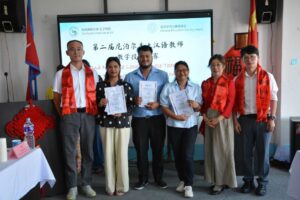
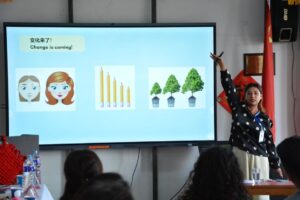
After rigorous preliminary rounds, six local Chinese language teachers advanced to the finals. Each finalist demonstrated their unique teaching approach and instructional strengths. The competition was judged on four key criteria: instructional design, classroom organization and communication, teaching methods and skills, and overall teacher demeanor and presence.
Finalists impressed the judges and audience with carefully crafted lesson plans that utilized multimedia tools, interactive teaching methods, and modern instructional strategies. These dynamic techniques effectively stimulated student interest, encouraged active classroom participation, and yielded impressive teaching outcomes—earning enthusiastic applause from attendees.
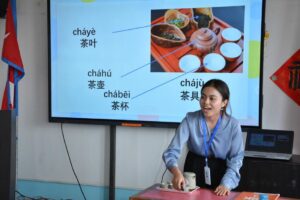
Mr. Pranaya Chitrakar from the Confucius Institute at Kathmandu University emerged as the champion. His natural and seamless class transitions, engaging and humorous language, effective teacher-student interactions, and diverse use of teaching tools set him apart. Mr. Mahendra Dhakal from CIKU and Ms. Elisha Joshi from the LRI Confucius Classroom secured second place, while the remaining three finalists received third prizes. All awardees were highly commended by the judges, guests, and participants for their outstanding performances.
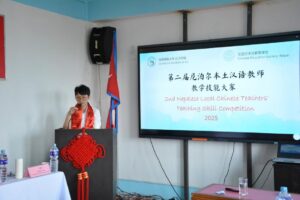
The successful conclusion of the competition offered local teachers a valuable platform to showcase and enhance their skills. The competition marks an important step forward in the localization of Chinese language education in the country and lays a strong foundation for future academic cooperation and cultural exchange.
The Confucius Institute at Kathmandu University reaffirmed its commitment to working closely with other Chinese language teaching institutions to host similar events in the future—actively contributing to the ongoing improvement of Chinese language education in Nepal.






Comments