
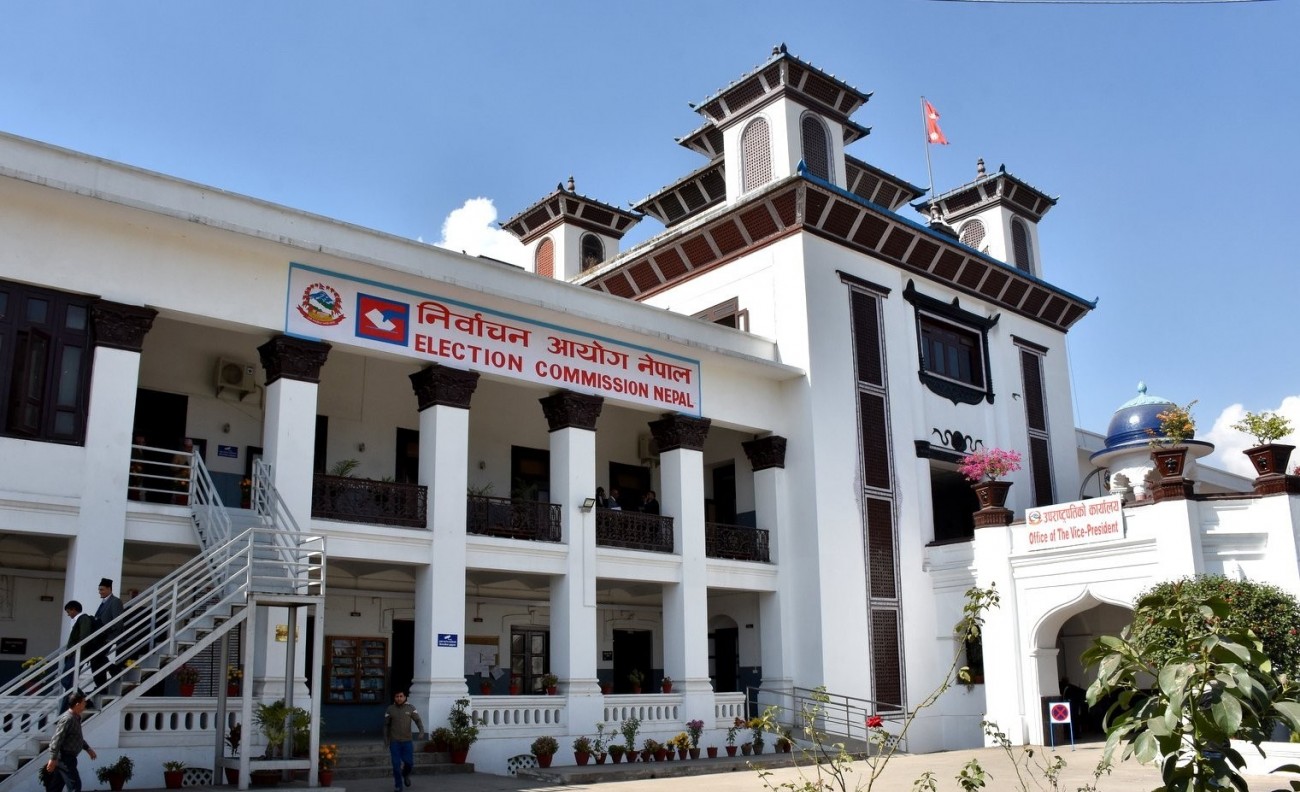
Kathmandu: With just 60 days left until the House of Representatives election slated for March 5, the Election Commission (EC) has put into effect a comprehensive code of conduct imposing strict limits on election-related activities.
The code prohibits government and semi-government institutions from engaging in or supporting activities that favour or oppose any political party or candidate. Public funds, programs, and projects must not be used in ways that provide advantage or cause harm to any electoral contestant. Acts that disrupt election management, voter education initiatives, or involve tampering with election materials are strictly banned.
According to the EC, government offices, public institutions, universities, schools, and colleges are off-limits for election rallies, meetings, or propaganda. Political parties and candidates are also barred from producing, distributing, selling, or displaying campaign-related items—such as jackets, T-shirts, caps, masks, badges, stickers, logos, bags, lockets, or tattoos—that carry party symbols or election signs.
The code further stipulates that campaign materials or political activities cannot be carried out on private or institutional property without the owner’s consent. Notably, the use of children in any form of election campaigning or propaganda has been explicitly prohibited.
In addition, the EC has banned campaign activities that obstruct public movement, including rallies, processions, public meetings, and mass gatherings. The spread of false, misleading, or hate-based content on social media during the election period is also strictly forbidden.
The Election Commission has warned that violations of the code will invite legal action in accordance with election laws.





Comments