
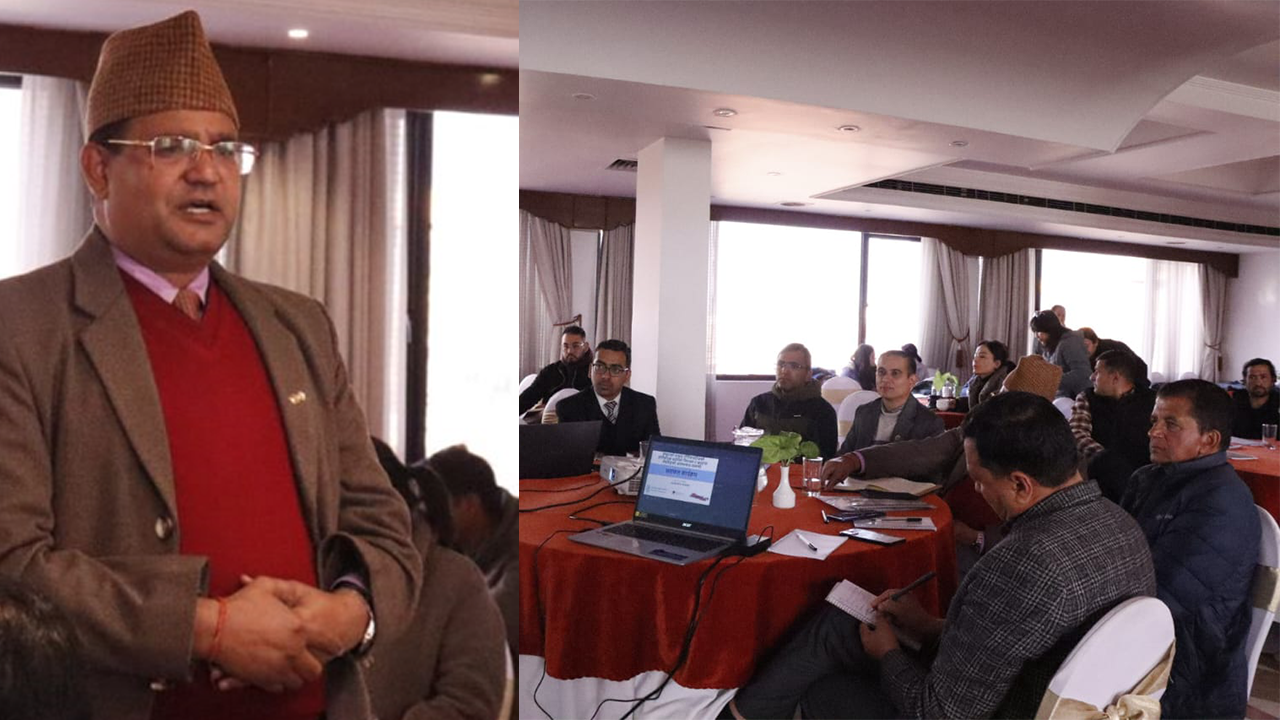
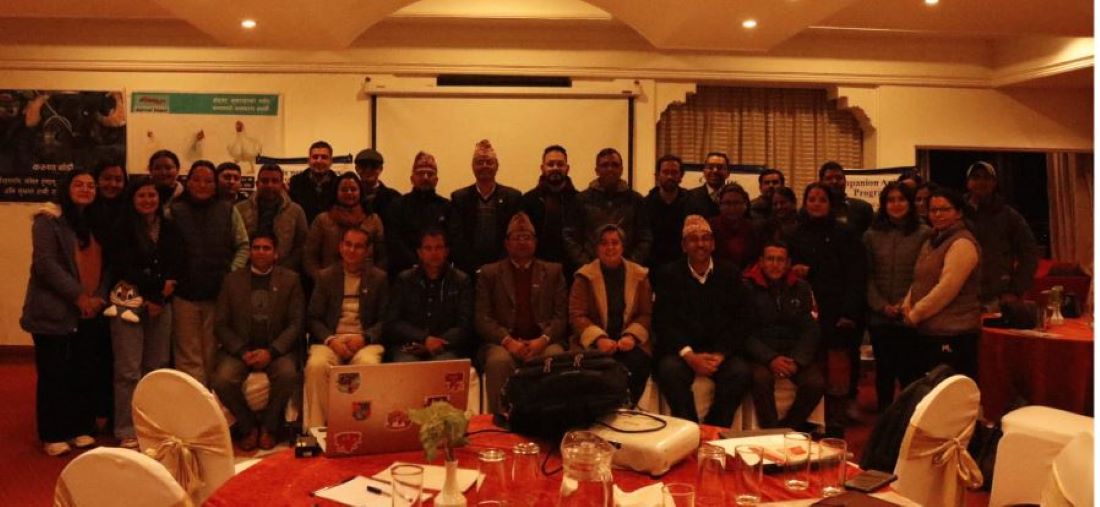
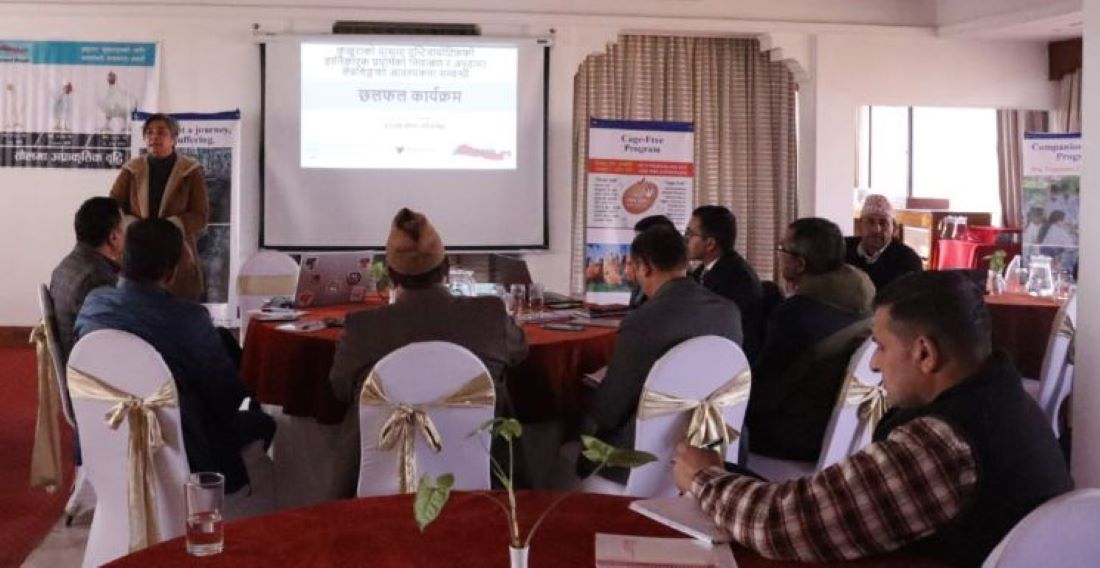
Kathmandu, 10 Jan 2025 (Keshav Bhattarai): A discussion program on “Need to Control the Harmful Use of Antibiotics in Poultry Meat and the Necessity of Egg Labeling” was held in Kathmandu. The discussion was jointly organized by Animal Nepal, Forum for protection of Consumer Rights-Nepal, and Open Wing Alliance—organizations that have been working effectively in the field of animal welfare for a long time. The event took place on Friday evening (Poush 26) at Everest Hotel, New Baneshwor, Kathmandu.
Experts participating in the program stated that just as visas are required to travel from one country to another, labeling should be mandatory when transporting poultry and eggs from one place to another. The discussion program was also organized to share information on studies conducted so far regarding antibiotic use. Animal Nepal’s Livestock Department Chief, Sulakshana Rana, expressed confidence that the discussion would contribute to preventing negative impacts on human health caused by indirect antibiotic residues in animal-based food products and meat. Rana claimed that consuming meat from antibiotic-fed chickens can negatively affect the mental and physical health of otherwise healthy individuals. She noted that the use of antibiotics in poultry meat has been widely discussed, and emphasized the need for detailed studies on the quantity of antibiotics used and their impact on human health.
Rana informed at the beginning of the discussion that Animal Nepal has been working in this direction in collaboration with Forum for protection of Consumer Rights-Nepal. She stressed the need for research on how much antibiotic residue is present in poultry and its effects on the environment and public health. She added that people are consuming antibiotics both when they are ill and through the meat they eat, which is adversely affecting health. “We Nepalis work very hard, yet by using antibiotics irresponsibly, we are turning our bodies into breeding grounds for diseases,” Rana stated.
Participants emphasized that egg labeling is absolutely essential. Jyoti Baniya, Chair of the Forum for protection of Consumer Rights-Nepal, said that the organization has repeatedly raised concerns regarding nutrition labeling. He stated that the forum is ready to move forward in collaboration with the government. He complained that egg labeling has not been implemented at all in Nepal, leaving consumers unaware of what kind of eggs they are consuming and where they are produced.
Vice President of Forum for protection of Consumer Rights-Nepal and senior advocate Bishnu Prasad Timilsina presented a detailed briefing on ‘antibiotic use in poultry and egg labeling’. He said that everyone should be concerned about how these practices can be systematically managed. Timilsina presented findings related to the types of antibiotics used in Nepal, their purposes, challenges, and conducted research. Citing a study of 30 poultry farms, he stated that 90 percent were found to be using antibiotics. He added that most poultry farmers lack knowledge about which antibiotics should be used for specific diseases. He expressed serious concern that antibiotics meant for humans in critical conditions are also being used in poultry.
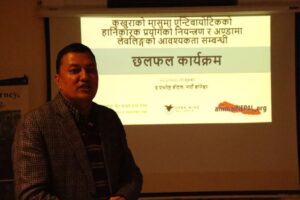
Timilsina stressed that the government must adopt effective monitoring and intervention policies to control indiscriminate antibiotic use. Although consumer protection policies and legal frameworks exist, the continued unavailability of clean poultry meat in the market is a serious issue. The program clarified the need for safe and responsible antibiotic use and measures to prevent misuse.
Regarding egg labeling, Timilsina warned that selling expired eggs even with labels could pose serious health risks. Presenting survey results, he stated that 85 percent of poultry farms selling eggs in the market do not label them. As most farms distribute eggs without labels, he emphasized that labeling must be made mandatory at the farm level. According to the research, only 10 percent of consumers complained about the lack of labeling, while 90 percent lacked awareness. When asked how they ensure the production date and farm name while purchasing eggs, consumers responded that they buy eggs simply if they look clean. The study showed that 87 percent of traders are willing to buy labeled eggs from farms. However, only 5 percent include production and packaging dates, and 95 percent of farms do not mention their names.
There is a clear need to raise consumer awareness regarding antibiotic use in poultry and egg labeling. Timilsina’s research concluded that no one should be allowed to compromise public health. Effective control requires coordinated action among the government, stakeholders, experts, and poultry farm operators.
Poultry farm business operators participating in the program said that operating their businesses has become challenging after hearing the concerns and research findings. They emphasized the need for business-friendly government policies to regulate these practices. Some speakers said the market situation has created fear among the government, consumers, and business operators alike. Participants complained that the state has been largely irresponsible and that testing exists only in name.
Ashok Parajuli, Chief Food Technologist at the Agriculture and Livestock Department of Kathmandu Metropolitan City, stated that management would be easier if the legal basis were clear. He added that a digital system would be effective in identifying the source farms from which eggs are distributed.
Dr. Akhanda Upadhaya, Medical Officer at Dolpa District Hospital, stated that poultry meat transported by road is more hazardous to health than meat transported by air. He said that people in remote areas are facing nutritional problems because they do not know the source of the poultry they consume. He emphasized the need to establish antibiotic laboratories in every district.
Another distinguished participant, Gokarna Aryal, said that although initiatives have been taken at the government level, challenges remain. He stressed the need for cooperation among the government, concerned stakeholders, and journalists. “The government system and its credibility in implementation are weak and must be strengthened,” Aryal said.
Similarly, Rajan Paudel, Chief of Community Health Sciences and Head Director (CDPH) at Kathmandu Teaching Hospital, said that the master’s-level curriculum is being revised to promote research. He emphasized that issues such as antibiotic use in poultry and egg labeling should be included in the curriculum. “Poultry and egg production should not be reduced; we must become self-reliant. Multiple studies and broader research are required to solve this problem,” he said.
Paudel stated that a study conducted in 42 districts found antibiotic residues in the meat consumed by the public. “The Drug Act was enacted in 2035 BS, but it does not include veterinary issues, which must be incorporated,” he said. Research has shown that consuming poultry and eggs produced using antibiotics affects the health of people of all ages. He explained that pregnant women and unborn babies face higher risks. Other impacts include yellowing of children’s teeth, digestive problems, diarrhea, liver issues, organ failure in the elderly, kidney disease, liver stress, and universal allergy risks. He stressed that antibiotic use must be taken seriously and called for government policies that promote poultry and egg production while discouraging antibiotic misuse.
Government-affiliated speakers said the discussion helped create a strong background for policy action. They stated that the issues raised would guide policy and legal implementation, adding that the government is clear in its legal and policy stance and committed to proper execution.
Dr. Umesh Dahal, Director General of the Department of Livestock Services under the Ministry of Agriculture and Livestock Development, recalled that the discovery of antibiotics in 1928 brought global optimism. He noted that since the 1940s, calls have been made for their proper use. He warned that indiscriminate antibiotic use could turn them into “silent killers.” If antibiotics have been knowingly or unknowingly misused in poultry, the department is ready to work collaboratively with all stakeholders to address the issue.
Dr.Dahal emphasized that controlled and appropriate antibiotic use is essential and said the department is actively working on this. He also committed to initiating egg labeling in Nepal, where such a system has not existed so far. He clarified that despite concerns raised during the discussion, the situation in Nepal is not yet critical. He stressed that excessive antibiotic use affecting human health is unacceptable. Addressing participants, he said, “The department has already stopped the practice of indiscriminate antibiotic use in animals. Plans are underway to promote alternative practices while increasing public awareness. Standards for broiler chickens were developed in 2064 BS and are currently being revised. Antibiotic treatment guidelines are also in the final stage of development.”
Various studies have shown that indiscriminate antibiotic use in poultry meat and egg production in Nepal has increased the risk of antimicrobial resistance, posing serious threats to human health. Stakeholders emphasized that regulation and awareness are equally essential. They stressed that active participation from government agencies, producers, consumers, journalists, and all concerned parties is necessary to address the issue. The discussion is expected to make a significant contribution to consumer health protection and improvement of the quality of animal-based products. The Department of Livestock Services has indicated that it will soon take policy-level and practical steps to implement egg labeling and control antibiotic use.








Comments