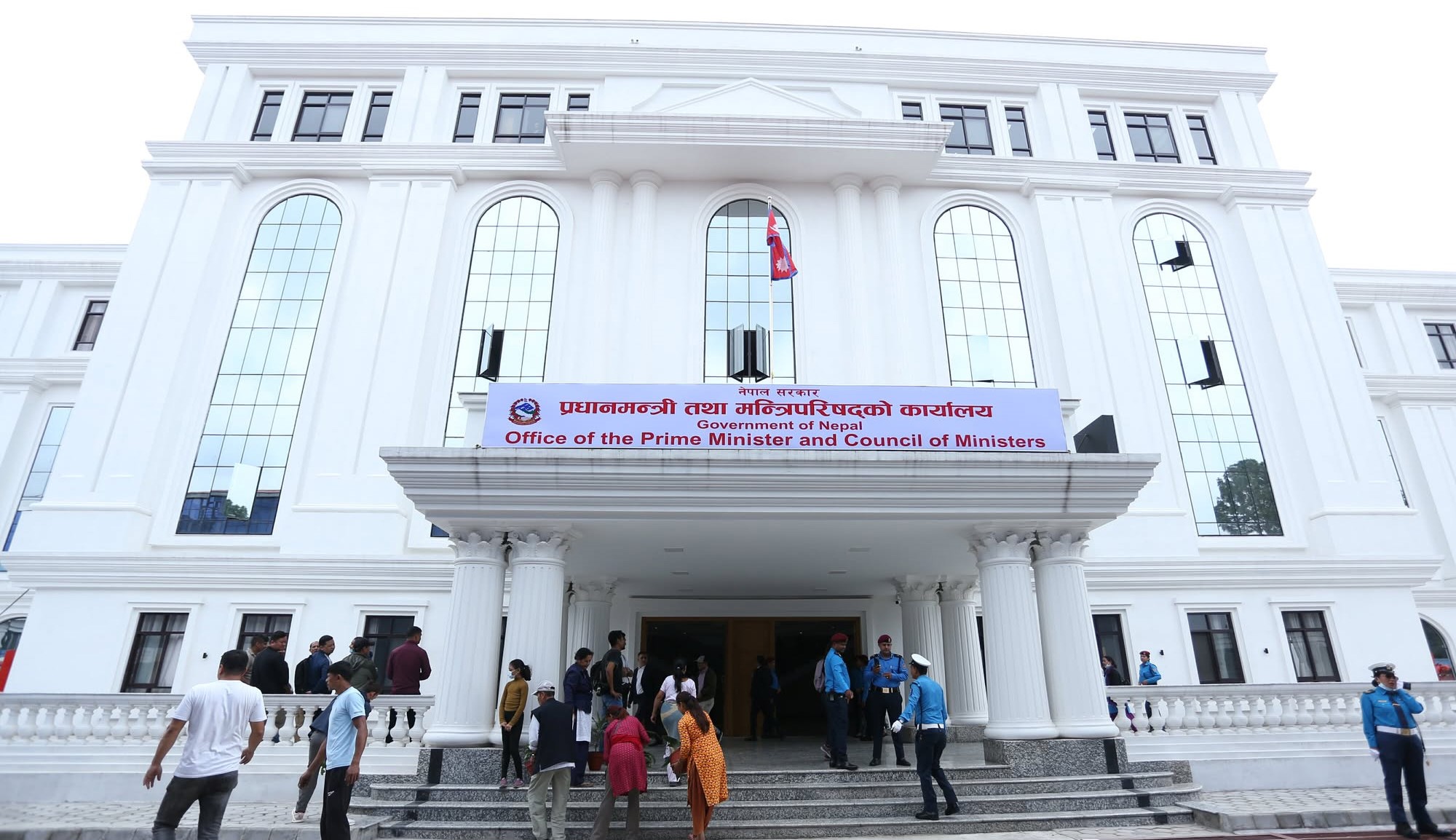
Kathmandu: Under the campaign titled “A New Commitment to Clean Administration,” the government is set to observe “Cleanliness Week 2083” nationwide starting today (Monday, Baisakh 28). The campaign aims to make public service delivery dignified, clean, and environmentally friendly.
According to the secretariat of Prime Minister Balen Shah, the initiative will involve all federal, provincial, and local government offices, as well as public educational institutions. The Office of the Prime Minister and Council of Ministers has issued a special directive instructing all bodies from federal ministries to local governments to actively participate in the campaign.
According to a notice issued by the Office of the Prime Minister and Council of Ministers, the national campaign will be formally inaugurated at 8:30 AM on Monday at Bir Hospital in the presence of Health and Population Minister Nisha Mehta.
The “Cleanliness Week Operation Guidelines, 2083” issued by the government states that the campaign aims to implement sanitation standards in government offices in a cost-effective manner while ensuring maximum results. The guidelines further emphasize the need for effective cleanliness management to maintain a clean and safe working environment in government institutions.
According to the Office of the Prime Minister and Council of Ministers, the guidelines were prepared in response to the negative impacts on service delivery and the health of employees and service recipients caused by the absence of clear standards for regular cleaning and waste management in government offices.
Under the guidelines, government notice boards, citizen charters, and signboards must be clear and well-organized. Cracked or peeling walls are to be repaired and repainted, while main service areas and entrances must be kept attractive and clean.
Similarly, toilets must be odor-free with a regular water supply ensured. Soap has been made mandatory at handwashing stations, and daily cleaning records must be maintained. Toilets are required to be women-friendly, equipped with sanitary disposal facilities, and, wherever possible, disability-friendly.
Offices must also provide at least two types of dustbins to separate biodegradable and non-biodegradable waste. Although the guidelines encourage proper management of unusable old materials, open burning of waste has been completely prohibited.
In addition, areas within 100 meters of office premises, including drains and sewage systems, must be kept clean. Parking areas are to be improved, and unmanaged wires and posters removed. Offices have also been instructed to establish help desks and fully operate information systems to ensure service recipients feel respected and organized.
Sustainability and Monitoring Mechanism
To ensure the sustainability of the campaign, each institution is required to designate a “Cleanliness Contact Person.” The guidelines also mandate the preparation of weekly cleaning schedules and monthly self-evaluations.
According to the directive, the overall responsibility for implementation and monitoring of the campaign has been entrusted to the heads of the respective institutions, who are also required to maintain regular records of all related activities.