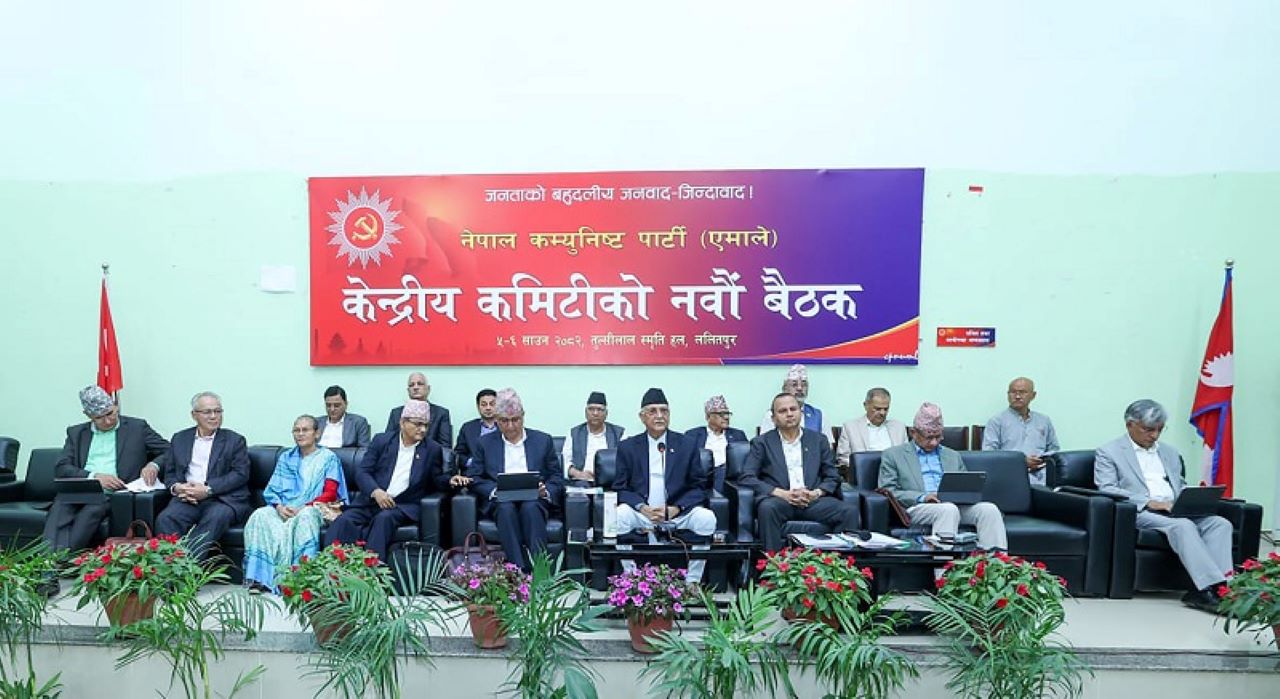
Kathmandu, July 23 — The CPN-UML has formally decided not to reintegrate former President Bidya Devi Bhandari into active party politics, concluding a pivotal two-day central committee meeting late Tuesday night. The decision marks a significant turning point in internal party dynamics as the UML looks to redefine its future leadership roadmap.
According to Rajendra Gautam, head of the party’s publicity department and a standing committee member, Party Chair KP Sharma Oli addressed the central committee with a proposal to keep Bhandari in a ceremonial and advisory capacity — in recognition of her role as the former head of state — rather than allowing her to resume political responsibilities within the party.
However, Oli’s proposal sparked notable dissent from within his own leadership circle. Senior figures including Vice-Chairmen Surendra Pandey, Yubaraj Gyawali, and leader Karna Thapa expressed clear opposition, reflecting broader divisions over the role of legacy figures in the UML’s evolving political strategy.
One of the meeting’s key moments came with an extended debate on the proposed amendment to the party statute, introduced by Vice-Chairman and Deputy Prime Minister Bishnu Poudel. Discussions spanned nearly 12 hours on Tuesday, highlighting deep engagement by party members over structural reforms and leadership criteria.
Central committee members, particularly those from Karnali Province, stressed that Bhandari should serve as a symbolic figure of the UML’s historical political journey, arguing that preserving her legacy in a non-active role would strengthen the party’s long-term credibility. A majority of speakers, including Chief Whip Mahesh Kumar Bartaula, voiced resistance to Bhandari’s political comeback, effectively closing the door on her return.
The committee also passed a series of significant statute amendments, including the scrapping of the 70-year age cap and the two-term limit for party officials — a move interpreted by many as part of the UML’s broader effort to consolidate experienced leadership and pave the way for a flexible succession strategy. These changes are set to be ratified at the party’s upcoming statute convention, scheduled for September 5–7 in Lalitpur.
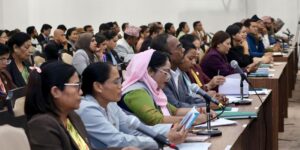
During the two-day meeting, 224 central committee members contributed to the discussions, with 131 speakers on the first day alone. Oli wrapped up the session by addressing the concerns raised by members and reiterating the importance of party unity as part of the UML’s ambitious “Mission 84” plan aimed at electoral resurgence.
Beyond the question of Bhandari’s role, the meeting underscored the UML’s focus on internal cohesion and structural realignment, signaling a critical phase in the party’s long-term strategy and leadership transition.