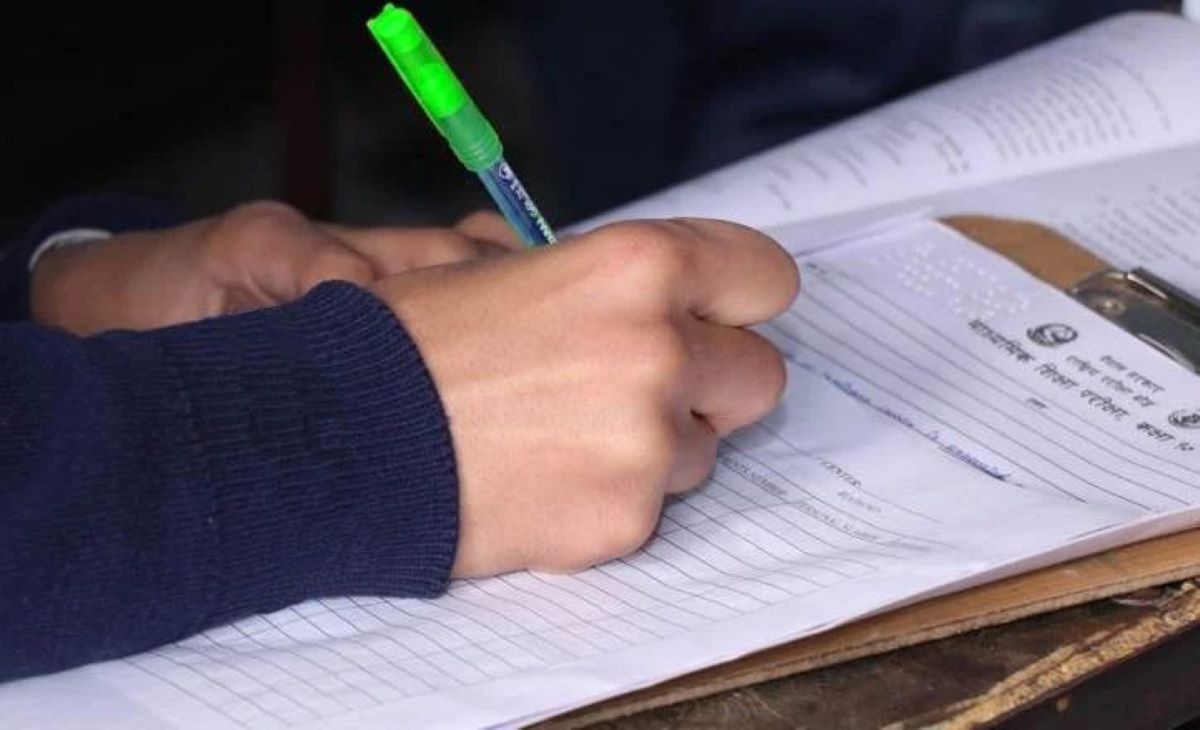
Kathmandu: The Secondary Education Examination (SEE), which begins today, is expected to be more transparent and well-managed this year. With the introduction of new guidelines aimed at streamlining the examination process and accelerating answer sheet evaluation, authorities anticipate a reduction in irregularities and quicker publication of results.
The Office of the Controller of Examinations (Grade 10), under the National Examination Board, is conducting the examinations simultaneously across the country, as in previous years. According to Examination Controller Tuka Raj Adhikari, the exams will commence at 8:00 AM from designated centers nationwide.
A total of 512,421 students are appearing in this year’s SEE, which will conclude on Chaitra 29. Among them, 441,566 are regular candidates, while 70,855 are appearing for grade improvement. The number of female candidates exceeds that of males, with 257,613 female students, 254,801 male students, and seven others participating.
Additionally, 23 students will sit for the examination from a center in Japan. The board has designated 1,966 examination centers across the country, with students from 11,379 secondary schools participating.
The question papers have already been dispatched to the respective centers in all seven provinces through Janak Education Materials Centre Limited. For security, each examination center will be staffed with 15 police personnel, one chief superintendent, one assistant superintendent, one invigilator for every 20 students, one office assistant for every 100 students, and two additional staff members.
Answer Sheets to Be Evaluated Within Three Days
This year, there is a plan to complete the evaluation of answer sheets within a maximum of three days after the examination. A new provision requires marks to be entered into a system, sealed securely, and submitted to the Education Development and Coordination Units within three days.
The answer sheets will be systematically recorded and packed before being sent in sealed envelopes, indicating the examination center and subject, to the Office of the Controller of Examinations.
According to the SEE Management and Answer Sheet Evaluation Directive, 2082, examiners must be present at evaluation centers by the time examinations conclude. Measures have been implemented to ensure that evaluators do not assess answer sheets from their own schools.
Evaluation and moderation must be conducted within designated centers, preferably in CCTV-monitored secure rooms. The directive prohibits taking answer sheets outside the evaluation center, assigning unauthorized personnel, or involving unqualified teachers in the evaluation process. The use of mobile phones and electronic devices inside evaluation rooms is also banned.
Strict disciplinary actions will be taken in cases of negligence, including re-evaluation, deduction of remuneration, removal from the list of examiners, or further legal action as per existing laws.
Collective Monitoring Prohibited
Collective monitoring of examination centers has been prohibited this year. The decision follows complaints that the presence of multiple organizational representatives during inspections disrupted students during exams. Monitoring committees, led by the Chief District Officer, have been formed in each district.
The examination schedule begins today with compulsory English, followed by compulsory Nepali on Chaitra 20, compulsory Mathematics on Chaitra 22, Science and Technology on Chaitra 23, Social Studies on Chaitra 24, optional first papers on Chaitra 25, optional second papers on Chaitra 26, and technical stream subjects on Chaitra 27, 28, and 29.