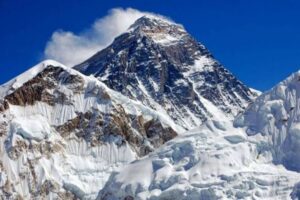
Kathmandu — Mountaineers actively involved in climbing expeditions have expressed serious concerns over increasing human activity on Mount Everest, the impacts of climate change, the growing accumulation of waste, and the declining interest of Sherpa youth in the mountaineering profession.
Concerns surrounding mountaineering have intensified not only due to avalanches, rapidly melting snow, expanding crevasses in the Khumbu region, and the increasing race to summit Everest, but also because of the mounting human waste left on the mountain. In addition, the profession is facing growing challenges as Sherpa guides continue to leave the field due to low wages, inadequate insurance and compensation, and unequal treatment despite the immense risks involved.
Pemba Chhiring Sherpa, who has successfully summited Everest 25 times, stated that although the Sherpa community has played a leading role in promoting Nepal and its mountaineering sector globally, they have long faced discrimination from the state itself.
He said, “Guides who play a crucial role in successful mountain expeditions do not receive compensation commensurate with the risks they take. They are denied adequate insurance equal to that provided to foreign climbers, and even state recognition is unequal. As a result, younger generations are gradually losing interest in mountaineering. The future of climbers also remains uncertain as the government has failed to ensure basic needs such as education and healthcare for their families.”
He further argued that the government has also failed to properly manage experienced climbers who have repeatedly reached mountain summits, stressing that the knowledge and expertise of retired climbers should not be neglected.
Dawa Sinju Lama, who recently returned to Kathmandu after summiting Everest for the 10th time during this spring climbing season, lamented that while the families of deceased foreign climbers receive substantial compensation and guarantees for their children’s higher education, Nepali climbing assistants who make such expeditions possible remain limited to compensation of only Rs. 1.5 million.
Tul Singh Gurung, President of the Nepal National Mountain Guide Association, pointed out that although mountain tourism is one of Nepal’s major sources of revenue, the state still needs to take more effective measures to address the problems faced by mountain guides, who are considered the backbone of the industry.
He stated, “Climbing assistants undertake extremely dangerous responsibilities such as route opening, fixing ropes, and transporting oxygen cylinders and essential equipment on the mountains. However, the main credit after expeditions often goes to foreign climbers or expedition companies. On one hand, mountain workers lack proper recognition, while on the other, the state imposes the same 15 percent tax on workers in the Tarai and those working in highly sensitive Himalayan regions, which is discriminatory.”
Another mountaineer, Jyamchung Bhote, stated that the mountaineering guide licenses issued by the government do not meet the standards set by the International Federation of Mountain Guides Associations. He also expressed concern that increasing political interference in the mountaineering sector has tarnished its reputation.
Indian mountaineer Prem Kumar Singh, who climbed Everest in 2013, said that the growing human pressure on Everest has contributed to climbers’ deaths. According to him, the increasing number of climbers often causes traffic congestion in the “Yellow Band” area, where climbers are forced to wait in long queues for hours, causing body temperatures to drop dangerously and leading to fatalities. He stressed that even inexperienced climbers are joining expeditions, and therefore the government should introduce clear standards for managing Everest expeditions.
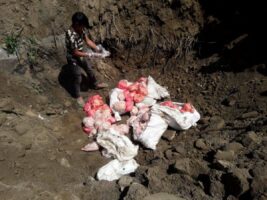
He also warned that Mount Everest is becoming increasingly polluted due to plastic waste, oxygen cylinders, tents, and human excrement left behind by climbers. He emphasized that protecting the local environment is equally important alongside preserving Everest itself. As of Wednesday, more than 900 climbers had successfully summited Mount Everest during the ongoing spring climbing season.